Do more without hiring more.

Fractional Operations & Automation Architect

I design and build custom, self-running business engines that remove operational bottlenecks and connect siloed tools, turning chaotic manual processes into reliable, hands-off operations. Open to contract engagements, consulting, and architectural leadership roles.

Services

Bottleneck Discovery & Process Mapping

Before a single line of infrastructure is deployed, your underlying business process must be audited.

Utilizing rigorous methodologies from Business Process Management (BPM) and throughput principles, I map your current operational pipelines to isolate systemic friction, data silos, and structural bottlenecks. I separate valuable operational steps from legacy habits, delivering a comprehensive architectural roadmap that prioritizes high-yield automation investments.

Lightweight Integration Architecture

Siloed applications create fragile, slow-moving organizations.

I connect your CRM, core databases, financial platforms, and proprietary tools into a unified business engine. This replaces manual, disjointed data copying with robust, state-managed integration pipelines that maintain transactional integrity across your entire business without the bloated cost of enterprise agency overhead.

Custom Automation Infrastructure Engineering

Hands-on engineering of production-ready, autonomous execution pipelines.

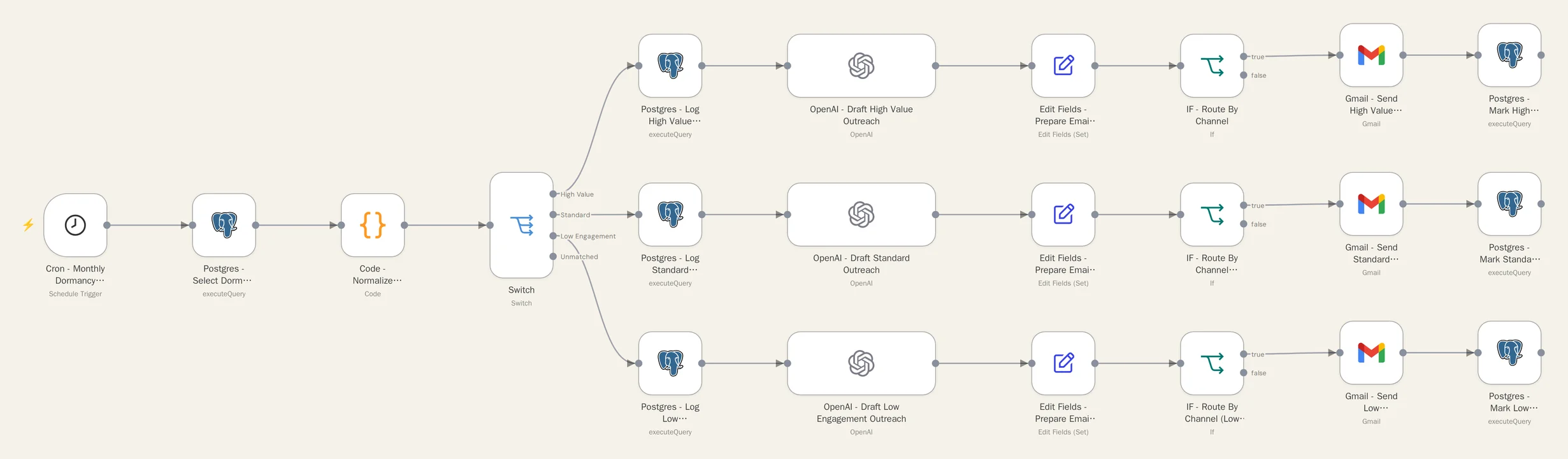
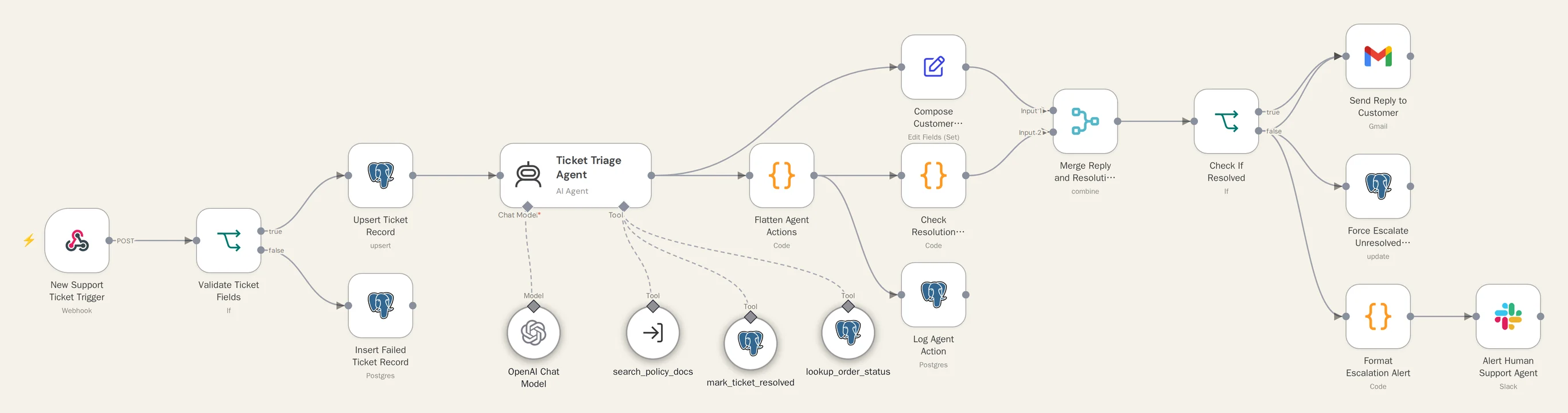
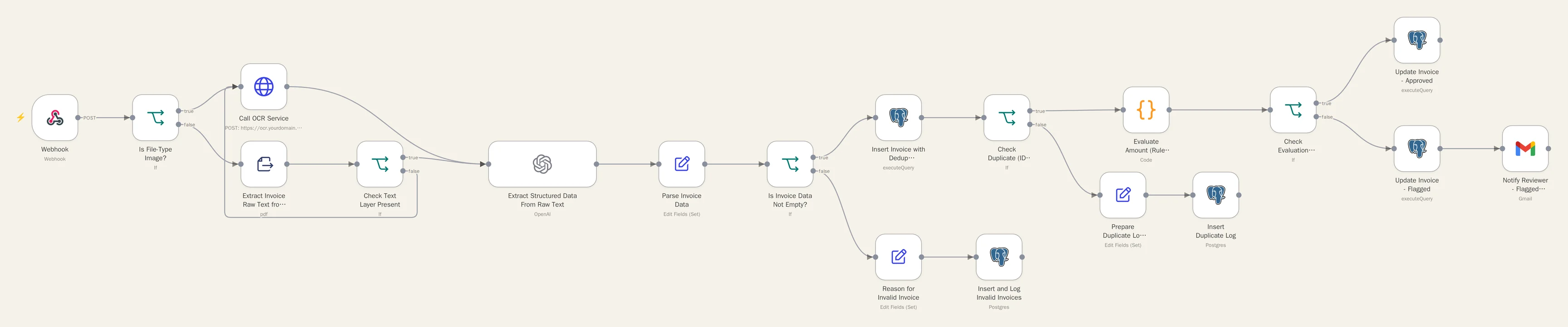
I deploy deterministic, high-throughput engines using n8n, Python, FastAPI, and PostgreSQL to handle complex, multi-step operations—ranging from client onboarding and lead routing to financial reconciliation and automated document generation. Every pipeline is engineered to act predictably, executing complex corporate logic with zero structural drift.

Resilience & Production-Readiness Review

Most automations are written as fragile scripts that fail silently, leaving your team to clean up the mess.

I audit and harden inherited or legacy workflows using reliability patterns. Your infrastructure is stress-tested for fault isolation, circuit breakers, strict input validation, and idempotency. Fragile workflows are converted into resilient, self-healing assets that fail loudly and log transparently, ensuring human operators are looped in before systemic disruption occurs.

Infrastructure Monitoring & Governance

Modern business systems require proactive maintenance. External APIs update, schemas drift, and third-party vendors experience downtime.

I provide ongoing architectural oversight and continuous monitoring to ensure your automated pipelines maintain peak operational throughput, stay defensively secure, and adapt fluidly as your business scales.

How I Work

Every engagement—whether a targeted consulting project or an embedded architectural role—adheres to strict engineering and management disciplines, ensuring predictable business outcomes before a single server is provisioned.

Start a conversation
  1. Hypothesis Formulation

    Prior to our initial session, I audit your visible market positioning to form a working hypothesis regarding your primary operational constraint—whether it is compressed cash-flow cycles, decayed lead-response metrics, or bloated back-office overhead.

    I enter the room to validate this operational bottleneck, not to pitch a pre-packaged technology wrapper.

  2. Empirical Discovery

    I focus entirely on historical, empirical facts rather than idealized procedures.

    Asking a stakeholder to "walk me through exactly what happened the last time a customer record or invoice was corrupted" exposes the actual operational exceptions that a system must handle, ensuring the architecture is built for reality, not theory.

  3. Process Baseline & Constraint Identification

    Using formal process notation, I document your workflows as they execute in production.

    We isolate the core constraint throttling your throughput and establish clear baseline metrics: cycle times, error rates, and manual labor hours. This quantitative baseline serves as the benchmark against which the completed architecture's financial return is verified.

  4. Deconstruction of Waste

    Not every step in a legacy workflow deserves to be accelerated; optimizing a non-bottleneck yields zero systemic throughput.

    I analyze the end-state your operation exists to achieve, stripping away redundant loops, outdated data handoffs, and unnecessary friction before introducing technical automation.

  5. Architectural Design Pattern Selection

    This is where systemic architecture replaces tactical scripting.

    I map as-is business process models, business process redesign models, and executable models before building. The entire integration pipeline is sketched and approved prior to deployment, defining exactly how the system handles malformed or duplicated payloads safely.

  6. Deterministic Scoping

    Before building, deliverables are bound to unambiguous business outcomes.

    We define technical completion based on verifiable system performance: a system that reliably processes your required volume of data, guarantees message delivery, and adheres to strict security parameters.

  7. Defensive Engineering & Stress Testing

    Infrastructure is constructed defensively from the ground up using Docker on Virtual Private Servers (VPS) for complete environment isolation.

    I build in strict data validation, circuit breakers, structured logging, and idempotent processing pipelines. Prior to handoff, I deliberately trigger downstream service failures to verify that the architecture isolates the fault gracefully, preserves data integrity, and alerts human administrators.

  8. Throughput Verification & Optimization

    Following a designated post-deployment observation window, system metrics are cross-referenced with our initial baseline.

    We review the verified capacity scaling—proving your ROI—and determine the next logical bottleneck to unlock across your business operations.

Portrait of Alex Idachaba

About

I am Alex Idachaba, a Fractional Operations & Automation Architect. I design and engineer the invisible, high-throughput digital infrastructure that allows scaling SMBs to dramatically increase operational capacity without a corresponding increase in headcount.

The Evolution of My Practice

My approach to system design is forged by an uncommon trajectory across diverse structural disciplines, providing me with a unique perspective on process optimization.

Process Compliance & Rules Engines: My background in land administration and real estate valuation taught me how business engines operate at a fundamental level. Enforcing compliance and navigating complex documentation taught me that a process is merely a series of cascading logic gates—and clear rules are required to prevent systemic breakdown.

Sequential Logic & State Control: Transitioning into animation forced me to cultivate a rigorous mental framework for state transitions. Animation demands absolute sequential discipline: every single frame is an explicit mathematical consequence of the frame preceding it. Designing a business workflow pipeline requires that exact same structural foresight. I continually evaluate what a specific integration step assumes to be true, and engineer deterministic safeguards for when those assumptions fail.

Defensive Engineering & Messy Data: My work in Python script development and data operations introduced me to the unforgiving reality of live data environments. Real corporate data is inherently flawed—payloads arrive corrupted, API schemas shift, and unique identifiers are dropped. I build under a permanent assumption: the input will eventually be malformed, the vendor will drop, and the architecture must absorb that failure gracefully.

Human-guided autonomous system design is the culmination of these core pillars. It demands the sequential logic of animation, the data resilience of defensive software engineering, and a deep comprehension of the underlying business workflows that exist long before software is introduced.

The Architectural Discipline

Every system I engineer is built for production-grade permanence, utilizing a highly deliberate, defensive stack: Python, n8n, FastAPI, Docker, and PostgreSQL, integrated safely with advanced processing pipelines via the OpenAI and Anthropic APIs.

I apply rigorous engineering patterns to everyday business operations: fault isolation, circuit breakers, structured logging, message idempotency, and secure data structures. The goal is to build an environment that fails safely, isolates vendor downtime, protects proprietary operational data, and loops in a human operator only when human judgment is truly required.

Strategic Engagements

I partner with ambitious SMBs, growth-focused operations leaders, and agencies via freelance contracts, consulting engagements, and architectural advisory roles. If your organization is ready to eliminate operational chaos and deploy self-healing workflow infrastructure engineered to scale your capacity, let’s discuss your architecture.

Engineering Operational Throughput — Let's Connect

If your organization is suffering from structural friction, disconnected tech applications, or manual data silos that are throttling your growth, let’s discuss your current operational bottlenecks. I will be entirely direct about whether your challenges align with my integration methodology before we schedule a formal architecture review.

A brief summary is all that is required. If you are looking to scope a contract or consulting engagement, please highlight:

  • Your existing application stack (e.g., HubSpot, QuickBooks, PostgreSQL, custom tools).
  • Approximate operational volume (e.g., weekly transaction payloads, lead volume, or records processed).
  • The primary operational constraint you are looking to eliminate.
Email me

Secure Channels:

I respond to architectural inquiries within one business day. Based in Nigeria (West Africa Time), I interface seamlessly with international client teams across all global time zones.

Available for corporate consulting, targeted contract engagements, and remote Fractional Operations & Automation Architect mandates.